Peeling paint is almost always a prep problem. Here is how a lasting exterior paint job is done, step by step.
Connecticut and New York winters are hard on paint. Freeze-thaw cycles, wet springs and strong summer sun all work on the finish at once. The good news: most early paint failure comes from poor preparation, not from the paint itself.
Start by removing what has already failed
Loose and flaking paint has to come off. New paint applied over a failing layer will fail with it. That means scraping every loose area and sanding the edges so the new coat lies flat.
Repair the wood underneath
Soft, rotted trim and siding will not hold paint. Cut it out and replace it before priming. Fill gaps and caulk joints so water cannot get behind the new finish.
Prime bare wood
Any area scraped down to bare wood needs primer. Primer seals the wood and gives the finish coat something to grip.
Pick the right weather window
Paint needs time to cure. Watch the overnight temperatures, not just the daytime forecast, and avoid painting when dew or rain is expected before the surface dries.
Then apply the finish coats
Two finish coats over well-prepared, primed surfaces will outlast a single thick coat over a rushed prep — every time.
See the difference
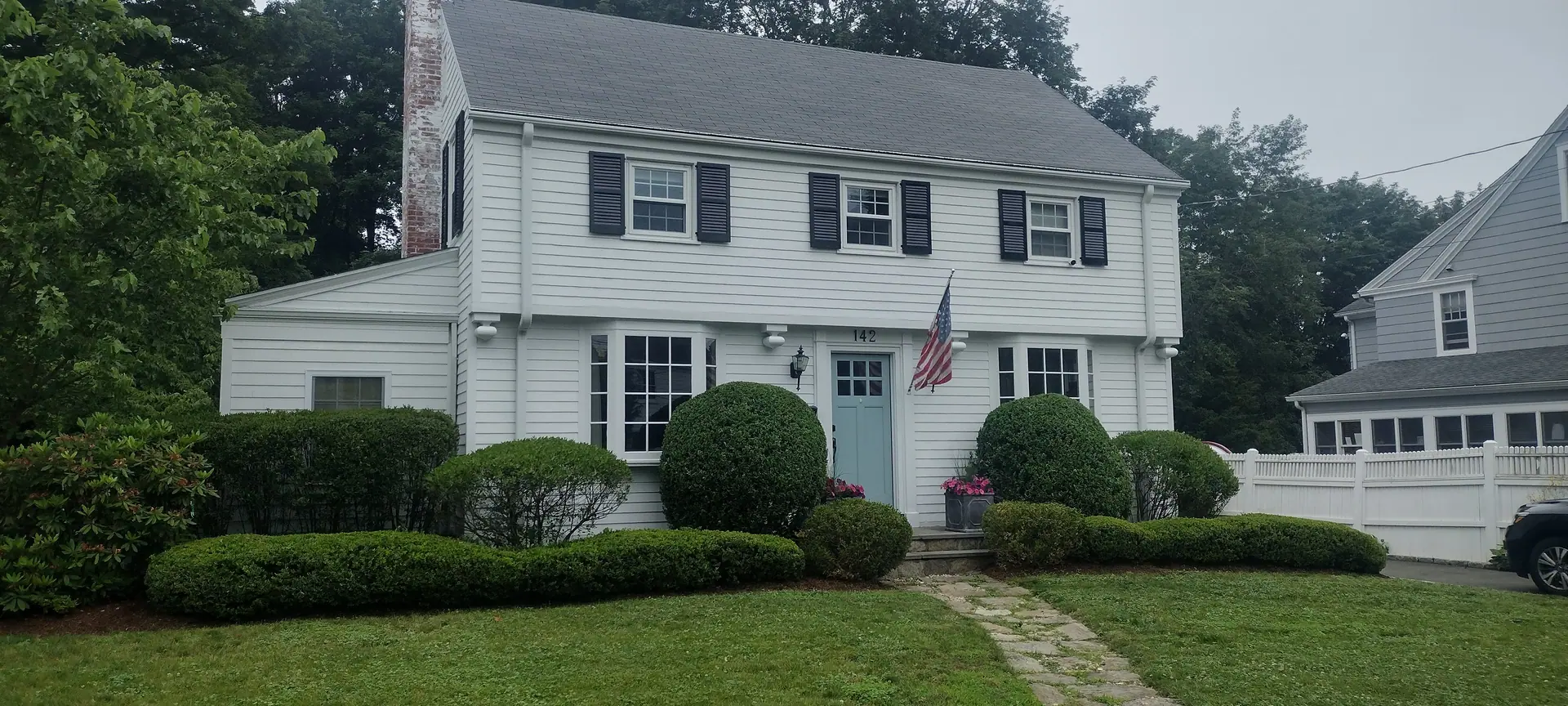
Our colonial exterior repaint shows what this process looks like from start to finish. Thinking about painting this season? Get a free quote.